Don’t Miss These 7 Invoice Details If You Want to Get Paid on Time
Struggling to get paid?
Most invoices get held up in the system when there is not enough information for them to be fully processed, so don’t miss these 7 invoice details if you want to get paid on time
I was working for a client doing their bookkeeping when an email came through with the instruction “Urgent, please pay as they are skint!”
I loaded up the banking app, grabbed the gizmo that creates passcodes and set to paying the person.
But when I opened the invoice, that is when the problems started, leaving me with having to reply to the email saying, “Loved to pay but I need some more information”.
There was no payment information! And they were a new client of my client so I had not past information I could use.
This got me thinking about what an invoice, and what information is needed so they can be processed and paid without delay.
What is an invoice?
An invoice is a request for payment to a buyer from a seller.
When information is missing, this can lead to a delay or even a refusal to pay, which is why a well-structured invoice and clear payment terms are crucial when it comes to making sure you get paid quickly.
What should an invoice include?
It might sound obvious, but make sure it is clearly labelled ‘INVOICE’ so customers don’t confuse it with something else.
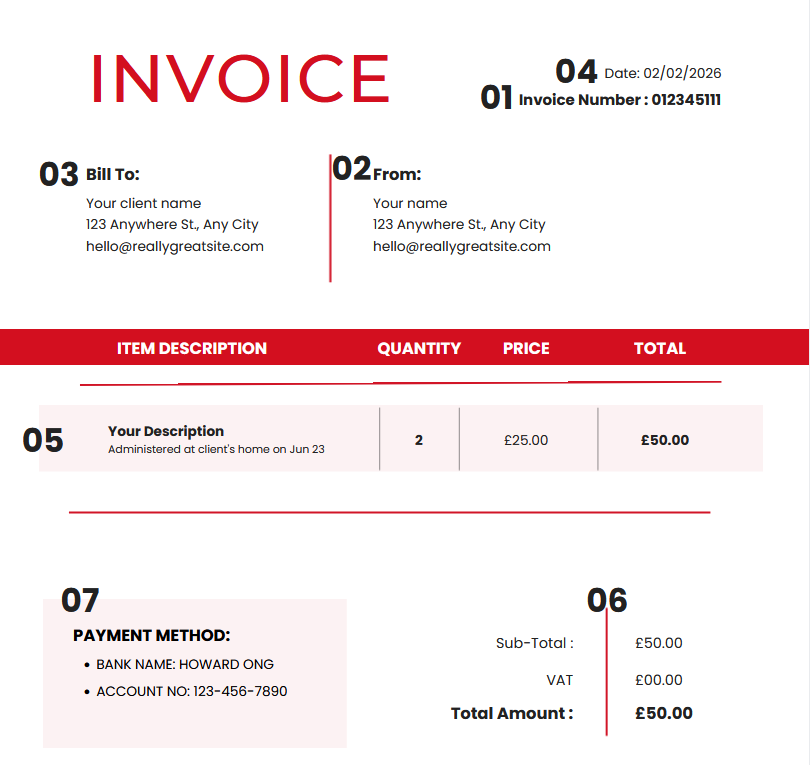
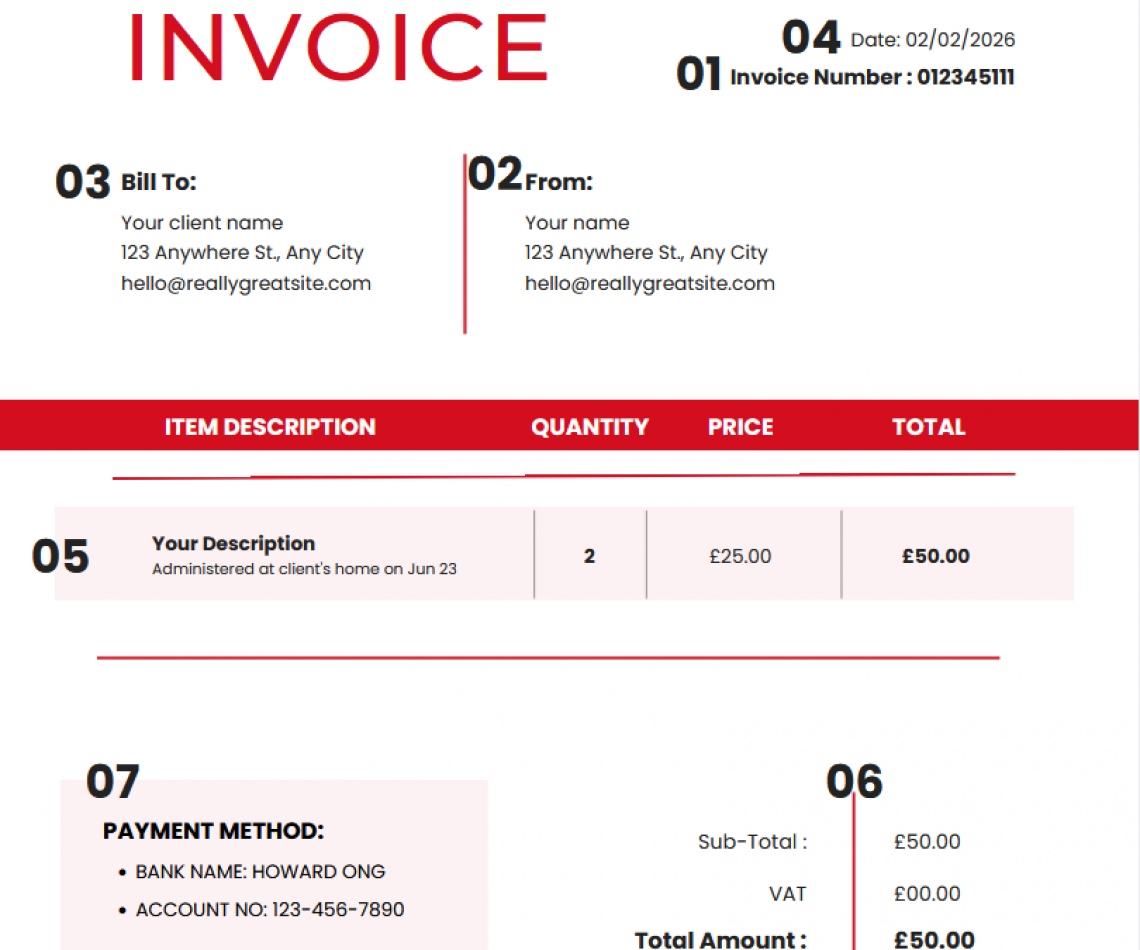
Also, don’t miss these 7 invoice details if you want to get paid on time.
1. Invoice reference number
Give every invoice a unique invoice reference number.
This makes it easier to retrieve the right document if there is a query, or when you get paid and are doing your bank reconcile you can make sure the correct invoice gets closed down.
You can store a list of chronological numbers on an Excel spreadsheet or use an online accounting software package like Xero or QuickBooks, which keeps track of invoice numbers for you.
2. Your company’s details
Include your trading name and business address, plus if you are a limited company, it should include the registered address and number of the business. Include your VAT number if you are VAT registered.
You might also want to include your email address and phone number so your customers can contact you if they need to.
3. The customer’s name and address
Make sure you include the correct name and address of the customer on your invoice and any reference numbers or purchase order numbers.
4. Date of invoice
The date the invoice was written, not when the goods or services were supplied.
5. Date of supply & A summary of the goods/services purchased
Include a detailed description of what the customer is paying for.
Each service or item should be included on a separate line, so it’s easy to understand.
6. Itemised breakdown of costs & Total amount due
If you’re supplying more than one item or service, each item should be listed with an individual amount next to it, along with, if required, a breakdown of VAT costs and rates.
7. Payment terms & Payment details
This is the usual one that stops payment.
People often do not put any details at all about how to be paid, or they don’t give the name they have registered with their bank account, so when a client adds a new payee on their banking system, it comes up with a matching error.
So, make sure you confirm how the customer should pay the invoice and provide any relevant payment details. For example, the name of the account holder, your sort code and account number for a BACS transfer.
Add payment terms, confirm when and how the customer should pay. For example, you could say something like ‘Payment due in 14 days from invoice date by BACS transfer’.
The next invoice you make out, don’t miss these 7 invoice details, and you should then get paid on time.